TL;DR A blocked drain in Cardiff is most often caused by fat, wipes and food waste in the city's older combined sewers, or by tree roots finding their way into Victorian and Edwardian clay pipework in streets across Roath, Cathays, Canton and Splott. The tell-tale signs are a gurgling toilet, a gully that won't drain after rain, or a bad smell near a manhole cover. A few things are safe to try yourself, but if more than one fitting is affected, or the same spot keeps blocking, it's time to stop guessing. Request a fast, fixed-price quote online rather than repeating a fix that isn't working.
The Warning Signs Cardiff Homeowners Should Know - Water pooling around an external gully that used to drain fine - Gurgling or bubbling from a toilet, bath or sink when another fitting is used - A persistent smell near a manhole cover, especially after rain - Slow-draining water in more than one room — this usually points to the shared drain run, not a single appliance - A recurring blockage in exactly the same place every few weeks
If it's just one sink running slowly, that's likely a local trap or waste-pipe issue. If it's several fittings at once, or an outside gully, the blockage is further down the system — in the shared drain that serves the whole house, or beyond.
Why Cardiff's Drains Block More Than Most Cardiff's housing stock plays a big part. Large swathes of the city — Roath, Cathays, Canton, Splott, Grangetown — were built as Victorian and Edwardian terraces with combined drainage: a single clay pipe run carrying both foul waste and rainwater away from the house. These pipes are often a century old, narrower than modern equivalents, and jointed rather than continuously sealed, which gives tree roots an easy way in wherever a joint has opened slightly.
South Wales also gets significantly more rainfall than much of England, and Cardiff's older combined sewers weren't sized for today's paved-over gardens and driveways. In the lower-lying, reclaimed dockland around Cardiff Bay, drainage has to work harder still, because the ground is flatter and closer to the water table than in the hillier northern suburbs like Llandaff and Whitchurch.
On top of the infrastructure, everyday habits cause a lot of blockages: fat and cooking oil poured down the kitchen sink sets hard once it cools, and "flushable" wipes don't break down the way toilet paper does — both are still the single biggest cause of blocked drains in terraced housing with narrow-bore pipework.
What's Safe to Try Yourself Before anything else, a few low-risk checks are worth doing:
- Clear leaves, silt and debris from an external gully grate — this alone solves a surprising number of "blocked drain" calls after wet weather
- For a fresh, grease-only kitchen blockage, hot (not boiling) water with washing-up liquid can sometimes shift it
- Avoid caustic chemical drain cleaners — on old clay pipework they can do more harm than good, and they're no use against root ingress or a cracked joint
- Never put your hands into a gully that has standing sewage in it
When to Stop and Get a Professional Involved Stop the DIY approach and get a fixed-price quote if:
- More than one fitting in the house is affected at the same time
- The same gully or manhole blocks again within a few weeks of being cleared
- There's a sewage smell, or waste backing up rather than draining away
- The blockage is outside, in a shared or external run — this is exactly what our external drain unblocking service covers day to day
A recurring blockage in the same spot is a strong signal of root ingress or a partially collapsed section rather than a one-off clog, and repeatedly clearing it without investigating why wastes time and money.
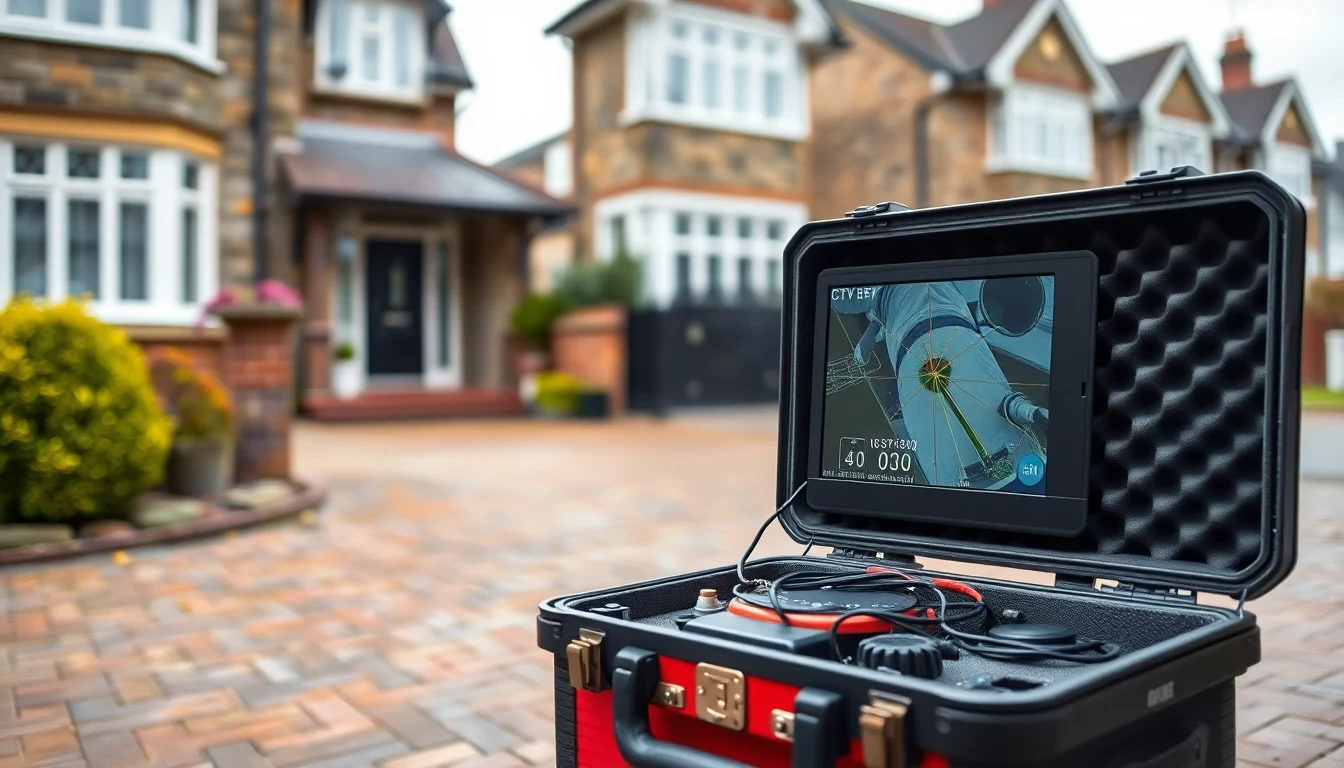
What a Professional Clearance Actually Involves Our blocked drains service starts by identifying where in the run the blockage sits, then clears it using drain rods for straightforward blockages or high-pressure jetting for grease, root intrusion or silt build-up. If a drain keeps blocking in the same place, a CCTV drain survey is the right next step — it lets us see the actual condition of the pipe (cracks, offset joints, root ingress) rather than clearing the symptom over and over.
Cost on any job depends on genuinely variable factors rather than a flat figure: how far into the run the blockage sits, how many access points (manholes or rodding eyes) are available, whether the blockage is a straightforward clear or points to a repair, and how urgent the access needs to be. We quote against your actual drain, not a guess — request a fixed-price quote online and we'll confirm the cost before any work starts.
Whose Drain Is It — Yours or Dŵr Cymru's? In Wales, Dŵr Cymru Welsh Water is the statutory sewerage undertaker, and it's responsible for the public sewer network and for lateral drains — the sections of drain that lie outside your property boundary, whether they serve your house alone or a whole terrace. That matters a lot in Cardiff's terraced streets, where several houses often drain into one pipe running under the front pavement or road. Since the private sewer transfer took effect on 1 October 2011, those outside-the-boundary sections have been the water company's responsibility rather than the homeowner's; as the property owner, you're generally responsible for the drainage inside your own boundary. If you're not sure which side of that line a blockage sits on, a CCTV survey is the quickest way to find out before anyone starts digging or quoting for work.
FAQ
**Will a blocked drain clear itself?** Sometimes a light, fresh blockage from leaves or grease will ease with rain or hot water, but a recurring blockage almost never resolves on its own — it's a sign of a physical obstruction such as root ingress or a partial collapse that needs clearing properly.
**Who is responsible for a blocked drain at my house — me or Welsh Water?** Your private drain, from the house up to your property boundary, is your responsibility. Beyond that boundary, the lateral drain and the public sewer it joins are generally the responsibility of Dŵr Cymru Welsh Water, following the transfer of private sewers and lateral drains on 1 October 2011.
**What affects the cost of clearing a blocked drain?** Access, the length of the run, how severe and how far in the blockage is, and whether it's a simple clear or points to a repair. We confirm a fixed price after assessing the actual job, never before.
**Is it my drain if it's outside my boundary but before the road?** Generally no. Under the Water Industry (Schemes for Adoption of Private Sewers) Regulations 2011, which took effect on 1 October 2011, a drain serving a single property that lies outside that property's boundary is a lateral drain and transferred to the sewerage undertaker — in Cardiff, that's Dŵr Cymru Welsh Water. Your responsibility normally stops at the boundary, so the section running on beyond it, under the pavement or road, is usually theirs to maintain rather than yours. If you're unsure exactly where the boundary sits in relation to the blockage, a CCTV survey will establish it before anyone commits to a repair.
**Can I use a chemical drain cleaner on an old clay pipe?** We'd avoid it. Older clay drainage common across Cardiff's Victorian terraces can be damaged by strong chemical cleaners, and they won't do anything for root ingress, silt build-up or a structural defect.