Skip to content
Get a Free Quote · 24/7 Emergency
Emergency Plumber Cardiff 247
Bridgend, Bridgend
Trusted local drainage specialists

Emergency Plumber in Bridgend

Local emergency plumbers and drainage engineers available 24/7 across Bridgend and surrounding areas. No call-out fee.

  • Fast response across Cardiff
  • Fixed pricing with no hidden extras
  • Fully insured drainage engineers
  • 24/7 emergency availability
Fast response Fixed pricing Fully insured Local engineers

Request your free quote

Free, no-obligation — we'll call you back fast.

Local response in Bridgend

We attend homes and businesses across Bridgend with rapid callout availability and clear fixed pricing.

  • Typical urgent response target: same day
  • Common callouts: blocked sinks, toilets, and outside drains
  • Coverage includes nearby neighbourhoods and links roads

Drainage in Bridgend

Bridgend is the county town of its own borough, roughly 20 miles west of Cardiff — an independent market and commercial centre rather than a Cardiff suburb, and its drainage reflects a town that has grown outwards from a river crossing for the best part of a thousand years. The name says it plainly enough: Bridgend exists because this is where the road crossed the Ogmore, and the Norman ruin at Newcastle still looks down on the old town from the western bank.

Three rivers define the setting. The Garw and the Llynfi come down from the northern valleys and join the Ogmore in and around the town, which means Bridgend collects runoff from three separate upland catchments before passing it on to the sea at Ogmore. After sustained heavy rainfall the low ground beside the rivers can see levels rise quickly, and when the rivers are high the combined sewer network has limited capacity to discharge. Natural Resources Wales publishes flood risk maps covering all three rivers, and they are the right first check for any property near the water. Dwr Cymru Welsh Water is responsible for the public sewers, and a non-return valve on the private connection is the standard defence against surcharge backing up into a ground floor.

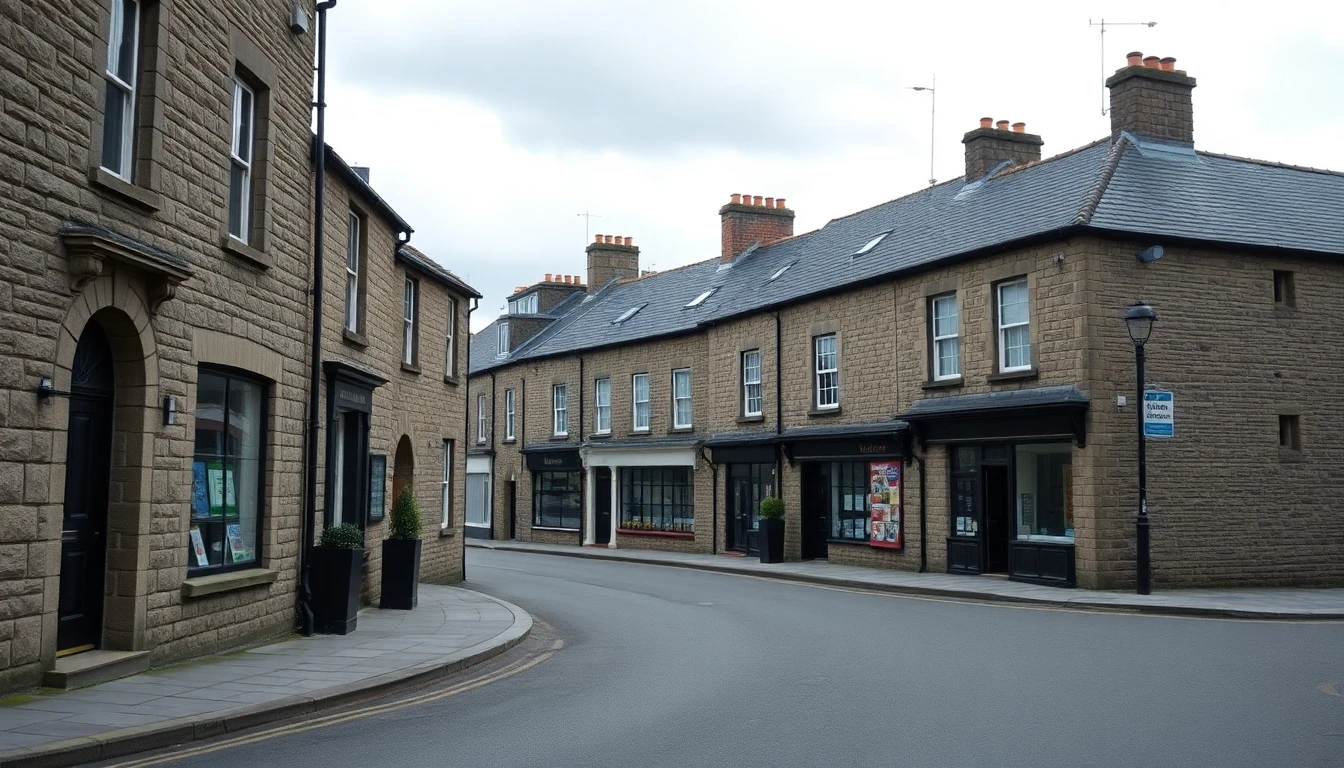
The old town around Newcastle and the town centre carries the oldest drainage. Victorian and Edwardian stone-built terraces and commercial premises here sit on salt-glazed clay laid between the 1870s and the 1910s, often in shared runs behind the frontages, and modified repeatedly since as bathrooms, kitchens and rear extensions were added. Original clay of that age has open joints, and the mature trees along the older streets have had decades to find them. Root ingress and joint displacement account for the large majority of recurring blockages we attend in this part of Bridgend.

The mid-century estates at Litchard and Wildmill introduce a different failure mode. Built largely between the 1950s and the 1970s, they were connected using the materials of the day, including a great deal of pitch fibre. Pitch fibre degrades internally after 40 to 60 years, blistering and losing its round profile until the effective bore is too narrow to carry normal flow. The tell-tale symptom is a drain that blocks again within weeks of being rodded clear. Because these runs often pass beneath driveways and shared access, no-dig structural relining is usually far more practical than excavation.

Brackla, developed from the 1970s onwards into one of the largest housing estates in Wales, and Broadlands from the 1990s, use plastic drainage that performs well. Their issues are different in kind: heavy household loading, misuse rather than material failure, and surface water management across large areas of hard standing. Bridgend's commercial drainage adds a third set of demands — the food outlets in the town centre and at the McArthurGlen Designer Outlet generate fats, oils and grease that congeal underground and constrict shared pipework, while Bridgend Industrial Estate and the borough's other former industrial land carry made ground and poorly documented services that make a survey before any excavation worthwhile.

The borough also reaches the coast at Porthcawl, where salt-laden air corrodes cast iron stacks, gutters and covers noticeably faster than inland, and seafront property faces the usual coastal combination of high water table and constrained discharge during storms. Between the three-river confluence, the Victorian old town, the mid-century estates, the modern developments and the coast, Bridgend needs assessment street by street — and every job is quoted at a fixed price in writing before we start.
Areas and landmarks we serve near Bridgend

Bridgend town centreNewcastle Castle ruinsCoity Castlethe River Ogmorethe River Garwthe River LlynfiMcArthurGlen Designer OutletBridgend Industrial EstateBracklaLitchardWildmillBroadlandsPorthcawl seafrontBryngarw Country Park

Recent case study in Bridgend

Call-out to a Victorian stone terrace near Bridgend town centre: the homeowner reported an external chamber overflowing during heavy rain and slow drainage from the rear extension the rest of the time. The property sat on low ground a short distance from the Ogmore. Our CCTV survey identified a displaced joint about 6 metres from the house where the original clay run passed beneath a later rear extension, with root ingress from a neighbouring garden tree exploiting the gap, plus a build-up of fat and debris downstream that had reduced the bore in the shared length behind the row. During high river levels the run had no headroom at all, which is why the symptom appeared as an overflowing chamber rather than a blocked sink. We jetted the shared length clear, relined 8 metres across the displaced joint and root entry, and fitted a non-return valve on the main connection to protect against surcharge when the Ogmore is high. Result: the chamber has stayed clear through subsequent storms and the extension drains normally. Tip: in Bridgend's older streets close to the rivers, an overflowing external chamber during heavy rain usually means two things at once — a defect in the pipe and no spare capacity in the network. Fixing only one of them rarely holds.

Bridgend drainage FAQs

How does the meeting of the Ogmore, Garw and Llynfi affect Bridgend drainage?

Bridgend collects water from three upland catchments before it heads to the sea, so river levels here respond quickly to prolonged rain across a wide area. Property on the low ground beside the rivers is the most exposed, and when the rivers are high the combined sewer network cannot discharge freely, which is when surcharge backs up into ground-floor fixtures. Natural Resources Wales flood maps cover all three rivers and are worth checking for any specific address. Keeping gullies and surface drains clear and fitting a non-return valve on the main connection are the two most effective practical measures.

What drainage should I expect in Brackla, Litchard and Wildmill?

They differ significantly. Litchard and Wildmill were largely built between the 1950s and the 1970s, so pitch fibre and mid-century clay are common, and pitch fibre of that age blisters internally until the bore narrows — the symptom is a drain that reblocks within weeks of rodding. Brackla was developed from the 1970s onwards and Broadlands from the 1990s, so both generally have plastic drainage in reasonable condition, with problems more often caused by misuse or surface water loading than by material failure. A CCTV survey tells you which you have before you plan an extension or a driveway.

Do you cover Porthcawl and the wider Bridgend county borough?

Yes. Bridgend is a county borough town in its own right about 20 miles west of Cardiff, and we cover the town along with Porthcawl, Pencoed, Coity and the surrounding communities across the CF31 to CF35 postcodes. Porthcawl brings coastal conditions with it: salt air corrodes cast iron stacks, gutters and covers faster than inland, and seafront property contends with a high water table and constrained discharge when storms coincide with high tides.

Get a Free Quote Contact