Drainage in Caerphilly
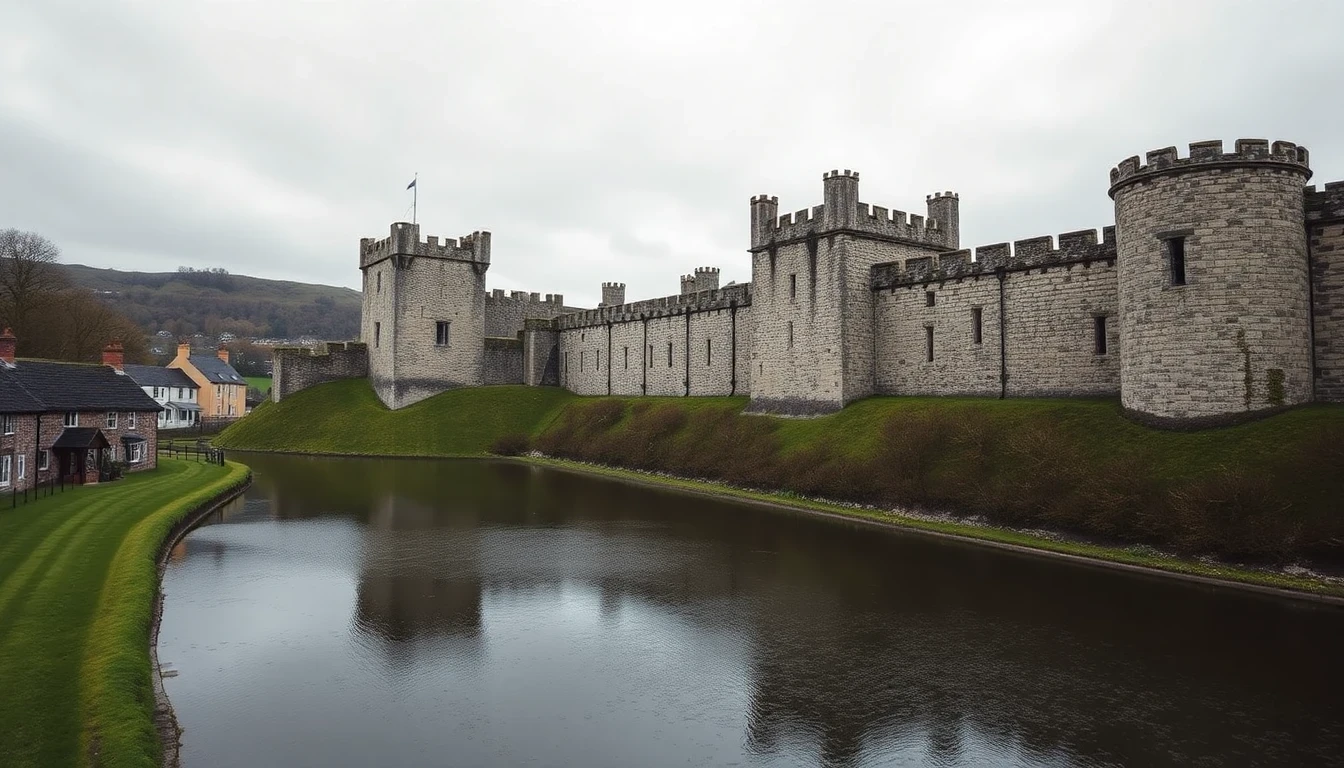
Caerphilly sits on the floor of the Rhymney Valley with Caerphilly Mountain rising between the town and Cardiff, and that basin position governs almost everything about local drainage. Water arrives here from every direction — off the mountain, down the Aber Valley, and along the River Rhymney itself — and it has to leave through a network that was extended piecemeal as the town grew from a castle settlement into a mining centre and then into one of the largest commuter towns in south-east Wales. The medieval builders understood the site perfectly well: Caerphilly Castle was deliberately laid out with dammed lakes and moats fed by the streams coming off the surrounding high ground, and those same streams still influence how the town drains today.
Surface water is the dominant seasonal issue. The valley sides around Caerphilly are steep, and prolonged rainfall running off them reaches the valley floor quickly. Property on the lower ground near the River Rhymney and along the flatter parts of the town centre can find gullies overwhelmed and combined sewers running at capacity during heavy storms, at exactly the moment the river itself is high. Natural Resources Wales publishes flood risk maps covering the Rhymney and its tributaries, and any owner buying on the valley floor should check them before committing. Dwr Cymru Welsh Water is responsible for the public sewer network beyond the property boundary.
The town centre and the older residential streets carry the oldest infrastructure. Nineteenth-century terraces built for workers at the collieries of Bedwas and the Aber Valley were served with salt-glazed clay drainage, much of it in shared rear runs behind the rows. A century and a half of ground movement, tree growth and progressively heavier household use has opened joints and admitted roots. Where those terraces back onto mature gardens or established hedgerows, root ingress is the single most common cause of the repeat blockages we are called to.
Caerphilly's mining legacy sits underneath all of it. The town lies on the South Wales coalfield, and although deep mining ceased decades ago, historic workings have left ground that continues to settle and adjust. Drainage is unforgiving of even small ground movement: a few millimetres of differential settlement is enough to step a clay joint, and a stepped joint catches solids and starts the blockage cycle. Properties in areas with known workings benefit disproportionately from periodic CCTV inspection, because the damage develops gradually and is usually detectable long before it causes a failure. The Coal Authority can supply a mining report for a specific address.
The post-war and later housing tells a different story. The large estates at Lansbury Park and St Martins, and the expanding residential areas at Energlyn, Bedwas and Trethomas, were built with mid-century clay and pitch fibre and, in the later phases, plastic. The pitch fibre in the earliest of those phases is now at or beyond its designed life and behaves exactly as it does elsewhere in South Wales — blistering internally, narrowing the bore, and producing blockages that rodding relieves only briefly. Relining restores those runs without excavation, which matters on estate properties where the drain frequently runs beneath a driveway or a shared access.
Valley-floor flood exposure, steep-ground runoff, Victorian shared drainage, mining-legacy movement and ageing mid-century pipework: Caerphilly presents most of the drainage problems South Wales has to offer within a few square miles. Assessment property by property is the only sensible approach, and we quote a fixed price in writing before any work starts.