Drainage in Penarth
Penarth's drainage tells the story of a town built almost entirely in one concentrated burst. In the four decades either side of 1880, Penarth Dock turned a small clifftop village into a busy coal-exporting harbour and a fashionable Bristol Channel resort at the same time. That single-era origin is unusual in South Wales, and it gives the town an unusually consistent drainage profile: salt-glazed clay pipework, cement-jointed, laid largely between the 1870s and the 1910s, and now comfortably past the century mark. When one Penarth terrace starts showing joint failure and root ingress, its neighbours are usually a few years behind it.
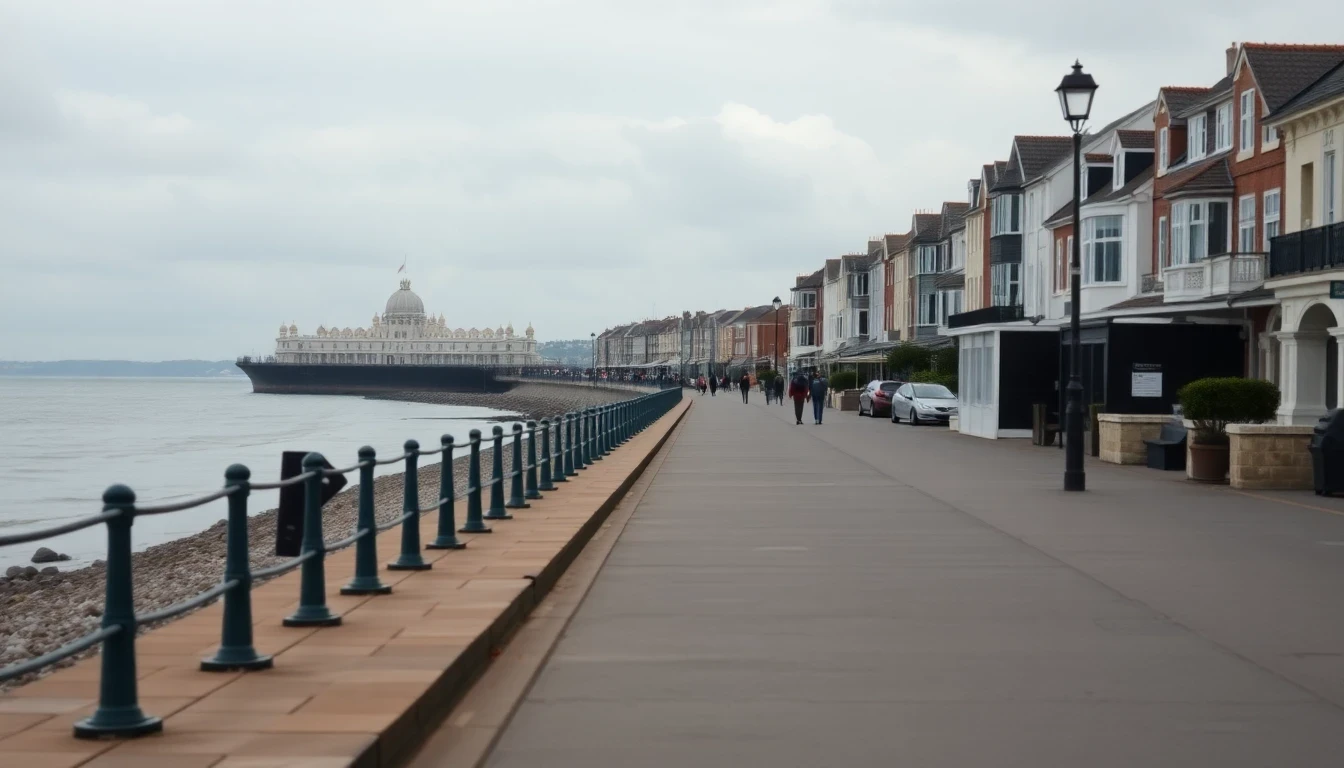
Topography is the second defining factor. Penarth sits on a headland, and the ground falls steeply from Penarth Head and the streets around Stanwell Road and Windsor Road down towards the Esplanade, the marina and Cogan. Those gradients are a genuine advantage — gravity does most of the work, and Penarth rarely suffers the flat-run standing water that affects low-lying parts of Cardiff. The trade-off is velocity. Waste moves quickly, and where a joint has opened or a length of pipe has settled, fast flow scours the defect wider rather than silting gently over it. Steep streets also make surface water a real concern during the heavy rainfall this coast receives, when water sheets down the hill roads faster than the gullies can swallow it.
At the bottom of the hill everything changes. Penarth Marina — the regenerated dock basin — and the low ground around Cogan and the Cardiff Bay Barrage sit close to sea level on made and reclaimed dock ground. Drainage here is shallow, the water table is high, and a good number of the apartment blocks rely on pumped systems rather than pure gravity. Pumped drainage needs maintenance in a way gravity drainage does not: a failed float switch or a fouled pump chamber becomes an emergency within hours rather than developing quietly over months. Buildings with pumping stations should have them serviced to a schedule, not after the first backup.
Salt air is Penarth's quiet destroyer. Properties along the Esplanade, on Penarth Head and on the exposed western streets face constant marine exposure, and it takes a steady toll on any external metalwork. Cast iron soil stacks, hopper heads, gutters, vent terminals and manhole covers all corrode noticeably faster here than on equivalent properties a few miles inland. We regularly find external stacks that look serviceable from the ground but are perforated behind the fixings, allowing waste to track down the wall and soak the brickwork before anybody notices a drainage fault at all.
Penarth's substantial Victorian and Edwardian villas bring their own pattern. The large houses around Stanwell Road, Windsor Road and the streets behind the Esplanade were built for merchants and ship owners, and many have since been divided into flats. Drainage designed for one household now serves four or five, and the original pipe runs are long — 20 to 30 metres from house to sewer is common where a villa sits back behind a mature front garden. Long runs through established planting mean root ingress, and shared ownership means nobody feels individually responsible for maintenance until something fails on a Sunday evening.
Our engineers cover the whole town, from Penarth Head and the Esplanade through Stanwell Road and Windsor Road to the marina, Cogan, Llandough and Dinas Powys. The combination of steep Victorian gravity drainage, reclaimed dock ground, pumped waterfront systems and constant salt exposure means Penarth genuinely rewards local knowledge. Every job is quoted at a fixed price in writing before work begins, with no call-out fee.