TL;DR
A CCTV drain survey in Bridgend identifies blockages, cracks, root ingress and displaced joints in the town's older drainage systems without any digging. If you're seeing slow drainage, gurgling, or a blockage that keeps coming back, a camera survey gives you clear video evidence of the pipe's condition and what — if anything — needs doing next. Get in touch online to arrange a visit from our local engineers.
Coverage across Bridgend and the wider South Wales area
We regularly work across Bridgend and the surrounding South Wales towns that feed into the same valley drainage networks, including Llantrisant and Cowbridge to the east, and out towards Caerphilly, Barry and Penarth. Bridgend's older housing stock — much of it built in the same Victorian and Edwardian wave as the terraces in Cardiff's Roath, Canton and Grangetown — shares the same underlying issue: shallow drains laid over a century ago, shared lateral runs serving several houses at once, and ground that shifts more than modern estates thanks to the area's mining and quarrying history. Whether you're in a terraced street in central Bridgend, a semi-detached property on the edge of town, or a period house further out towards the valleys, our team knows how to access inspection chambers, manholes and rodding points without unnecessary disruption to your garden or driveway.
What a CCTV survey reveals in older valley housing
Drains in Bridgend's Victorian and Edwardian terraces were typically laid in vitrified clay or, in later extensions, pitch-fibre pipe — both of which become brittle with age. A camera inspection routinely uncovers:
- **Root ingress** — mature trees send fine roots into pipe joints seeking moisture, and the camera shows exactly how far the infiltration has spread.
- **Pipe deformation** — ground settlement, common on sloping streets, can cause a section of pipe to sag or deform, visible on screen as a sudden change in the pipe's shape.
- **Joint displacement** — original mortar joints crack or wash out over time, leaving misaligned sections that catch debris and slow the flow.
- **Collapsed or cracked sections** — particularly under driveways or roads that see regular vehicle traffic over a shallow, ageing sewer.
- **Debris build-up** — fat, silt or general debris accumulating in a shared drainage run serving several terraced properties at once.
- **Misconnections** — surface water gullies or downpipes wired into the wrong system, which matters for compliance with Dŵr Cymru Welsh Water's discharge requirements.
Because most of this sits beneath gardens, driveways or under the house itself, a CCTV drain survey is the only realistic way to confirm what's actually happening before anyone reaches for a spade. Where the cause isn't obvious from the footage alone, a follow-up drainage investigation can trace exactly where a persistent issue is originating.
Step-by-step: what happens during a CCTV drain survey
- **Initial consultation.** We talk through what you've noticed — slow drainage, foul smells, a blockage that keeps returning — and review any existing drainage plans if you have them.
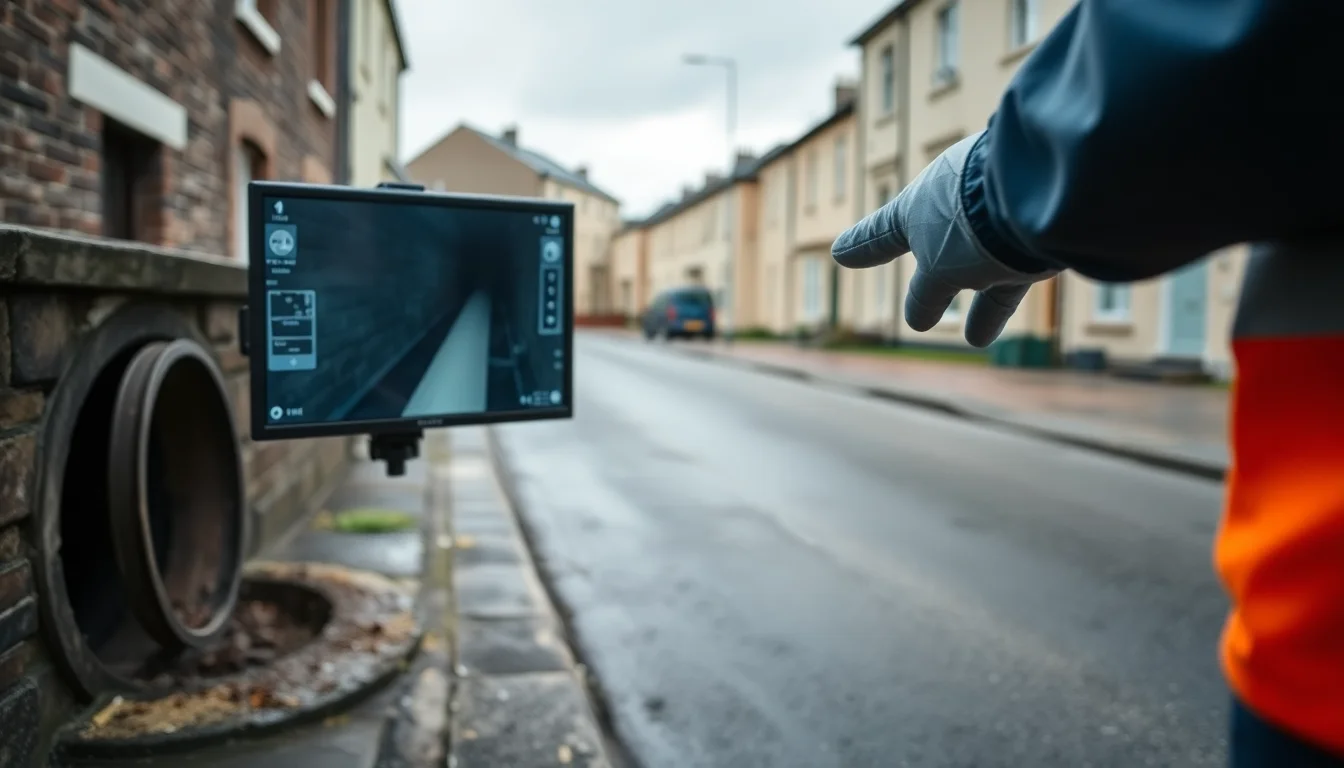
- **Access check.** Our engineer locates the nearest manhole, inspection chamber or rodding point. In older terraces these are often in a rear yard or shared access way, so we confirm access before starting.
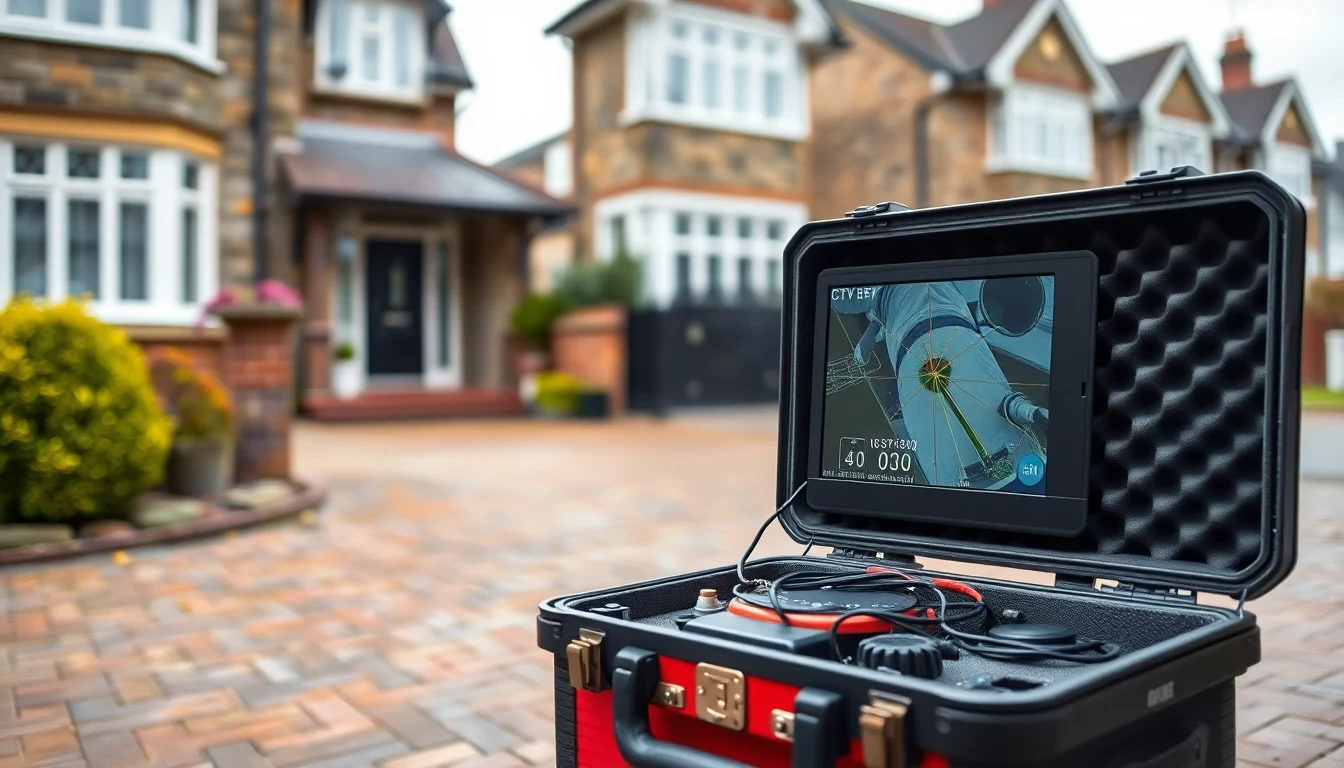
- **Camera preparation.** A waterproof push-rod camera with a self-levelling head and built-in lighting is set up, with the rod length chosen based on the likely distance to the problem area.
- **Insertion and navigation.** The camera is fed into the drain while the engineer watches the live feed, noting any roots, debris, cracks or misalignment, and steering around bends common in older clay systems.
- **Recording.** Footage is recorded throughout, with key frames annotated to show distance, defect type and severity — useful if the report needs to go to Dŵr Cymru Welsh Water or an insurer.
- **Reporting.** We compile a clear report with the video, a schematic of what was inspected, and recommended next steps, whether that's jetting, a point repair, relining, or nothing at all.
- **Follow-up advice.** We explain what we found in plain terms and, if work is needed, provide a quote so you can decide how to proceed.
Throughout, the aim is to avoid unnecessary excavation and keep disruption to a minimum, particularly on period properties where reinstating original brickwork or paving isn't straightforward.
What drives cost, how long it takes, and when it's worth doing
The scope of a CCTV drain survey — and therefore what it involves — depends on a handful of real factors: how much pipe needs inspecting, how accessible the chambers are, the age and material of the pipework, and whether a preliminary jet wash is needed to clear silt before the camera can pass. A formal report for a lender, insurer, or Dŵr Cymru Welsh Water also takes longer to compile than a straightforward visual check.
A standard survey of a single lateral serving one terraced house typically takes one to two hours on site, including setup and pack-down. A more complex job covering several connected properties can take longer.
It's worth considering a survey if you notice persistent slow drainage that plungers and shop-bought treatments don't fix, gurgling from sinks or toilets, damp patches appearing in the garden, or a blockage that clears temporarily and then returns within days or weeks. It's also sensible before buying an older property in the area, since a survey can flag a defect that's simple to negotiate on now but expensive to inherit later.
Frequently Asked Questions
**How much does a CCTV drain survey cost?** Cost depends mainly on the length of pipe being inspected, how accessible the chambers are, and whether a formal written report is required. Get in touch online with a description of the issue and we'll give you a straightforward quote.
**How long does a CCTV drain survey take?** A standard survey of one property's lateral drain usually takes one to two hours on site. Larger or more complex jobs covering shared drainage runs between several properties can take longer.
**What is a CCTV drain inspection actually for?** It's a way to see the inside condition of an underground pipe — cracks, root ingress, blockages, misaligned joints — without digging, using a waterproof camera fed through an existing access point.
**Do I need a CCTV drain survey, or can I just book a blockage clearance?** If it's a one-off, simple blockage, a straightforward clearance visit is usually enough. A survey is worth adding when the blockage keeps recurring, when you're buying or selling a property, or when you need documented evidence of pipe condition for an insurer or Dŵr Cymru Welsh Water.