TL;DR
If your Cardiff home has no heat, no hot water, or you've spotted a boiler leak, the first job is to work out which category the fault falls into before requesting help. A boiler with heating but no hot water almost always points to a different fault than one with hot water but no heating, and a visible leak changes what's safe to touch. Note your symptoms, run through the checks below, then get in touch online about our emergency boiler repair service and our engineers will take it from there.
Symptom triage: no heat, no hot water, a leak, or pressure loss
Boiler faults tend to fall into one of four patterns, and knowing which one you're dealing with helps you describe the problem accurately and avoid checks that aren't safe to attempt yourself.
**Heating works, but there's no hot water.** In a combi boiler this usually points to the domestic hot water side: a blocked plate heat exchanger, a faulty diverter valve, or a flow sensor that isn't registering. If you have a hot water cylinder rather than a combi, the fault is more likely a stuck motorised valve or a cylinder thermostat that's failed.
**Hot water works, but there's no heating.** This is a live, high-volume search pattern for good reason — it's one of the most common combi boiler complaints. It typically means the central heating circuit has an issue rather than the boiler itself: a seized pump, an air lock in the radiators, or a room thermostat or programmer that isn't calling for heat.
**A visible boiler leak.** Water around the casing, at pipe joints, or dripping from the pressure relief valve outlet pipe (usually exiting through an outside wall) signals a breach somewhere in the system. Even a small, slow drip can gradually drain pressure and trigger a shutdown.
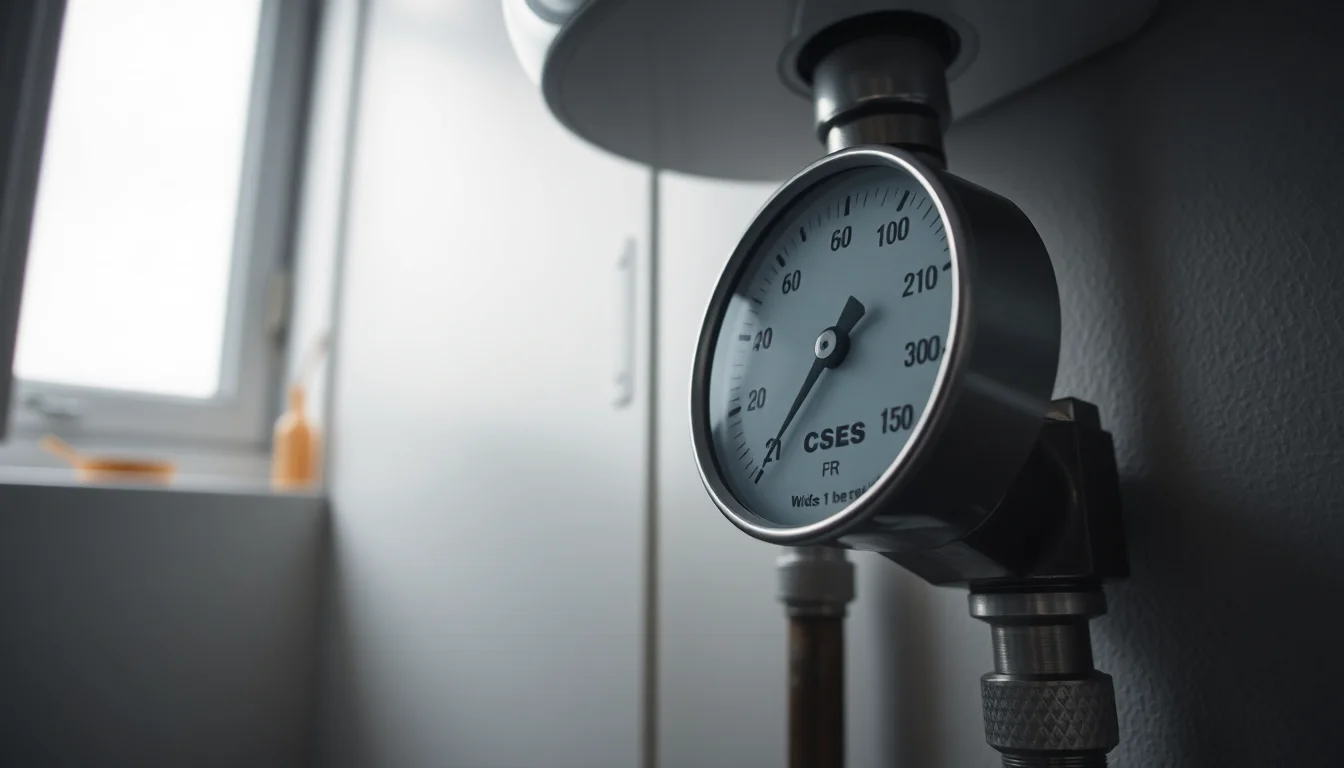
**Pressure loss.** If the gauge sits below 1 bar, or in the red zone, and the boiler keeps cutting out, you likely have a leak in the sealed system, or the expansion vessel has lost its charge.
Matching what you're seeing to one of these patterns gives an engineer a head start before they've even arrived.
What you can safely check before booking
None of the following involves opening gas components or removing panels, and doing them first speeds up diagnosis — or occasionally resolves a minor issue on its own.
- **Check the pressure gauge** — usually a small dial on the boiler front with a green zone between roughly 1 and 2 bar. Note the reading; don't attempt to repressurise via the filling loop unless you're confident doing so, as over-pressurising causes its own problems.
- **Check the thermostat and programmer** — confirm the room thermostat is set above the current temperature and any timer or smart control is calling for heat. Swap batteries if a wireless thermostat's display is blank.
- **Check the consumer unit** for a tripped breaker on the boiler's circuit. Reset it once; if it trips again immediately, leave it off and wait for an engineer, since a repeat trip usually means an electrical fault.
- **Look for visible leaks** with the boiler off at its isolator — around the base, along pipework, and at the pressure relief valve outlet. If you find a steady drip, note exactly where it's coming from; don't try to tighten fittings yourself.
- **If you smell gas,** stop checking. Turn off the gas supply at the meter if safe to do so, open windows, don't operate light switches, and leave the property. The National Gas Emergency Service runs a 24-hour helpline for exactly this — a statutory safety line, not a company number, printed on your gas bill.
If any check reveals a persistent leak, a breaker that won't stay reset, or a gas smell, stop there and arrange an emergency visit rather than continuing to investigate. Boiler faults rarely wait for convenient office hours, which is why our out-of-hours plumber service covers evenings, weekends and bank holidays as well as the working day.
Why gas appliance work is a regulated activity
In the UK, any work on a gas appliance — installation, servicing, repair, or adjustment — falls under the Gas Safety (Installation and Use) Regulations 1998. The reasoning is straightforward: natural gas is flammable, and a poorly sealed or badly vented appliance can lead to carbon monoxide exposure, fire, or explosion.
Because of that risk, only individuals assessed as competent under a recognised gas competent-persons scheme may legally carry out gas work. These schemes assess engineers against national technical standards and issue an ID card, typically renewed every five years, showing the individual's photograph and a unique registration number. Crucially, that registration belongs to the individual engineer, not to a company as a brand — so it's worth asking to see the attending engineer's ID card rather than taking a company's word for it. Our guide on finding a reliable emergency plumber in Cardiff covers the other questions worth asking before you book. That ID card is the real proof of competence, and it's also why a DIY fix on the gas circuit, combustion chamber, or flue isn't a sensible shortcut, however tempting on an emergency callout.
What tends to go wrong in Cardiff's older terraces versus newer builds
Cardiff's housing stock ranges from solid-walled Victorian and Edwardian terraces in areas like Roath, Canton, Cathays and Grangetown, through to more recent development around Cardiff Bay and Pontcanna, and each brings a different set of boiler headaches.
In the period terraces, boilers were frequently retrofitted into pipework never designed for a modern combi's flow rates. Corroded copper or steel pipework hidden under floors or within solid masonry can develop pinhole leaks that show up as slow pressure loss or a damp patch on a ceiling below. Flue routing can also be awkward, since solid external walls and ornate brickwork weren't designed with balanced flues in mind, and a poorly terminated flue can cause intermittent lockouts. Dŵr Cymru Welsh Water's supply also carries a fair amount of dissolved mineral content, which in older pipework translates into scale build-up on heat exchangers over the years, gradually reducing efficiency.
Newer builds tend to have pressurised sealed systems that hold pressure well unless there's a genuine leak, plus shorter, standardised pipe runs that reduce the risk of air locks. That doesn't make them immune, though — electronic sensors can fail, pumps can develop noisy bearings if a system isn't flushed periodically, and in exposed spots like the reclaimed dockland around Cardiff Bay, a condensate pipe can freeze in a cold snap and trigger a fault-code shutdown.
Frequently Asked Questions
**My boiler has hot water but no heating — what does that mean?** This is one of the most commonly searched boiler faults in the UK, and it usually points to the central heating circuit — a stuck diverter valve, an air-locked system, or a thermostat that isn't calling for heat — rather than the hot water side, which is clearly still functioning.
**My boiler has heating but no hot water — what's wrong?** In a combi boiler this typically means a fault on the domestic hot water side: a blocked plate heat exchanger, a diverter valve stuck in the heating position, or a flow sensor not detecting demand. With a hot water cylinder, its own thermostat or motorised valve could be at fault instead.
**Is a dropping boiler pressure gauge something to worry about?** A boiler that needs repressurising every few weeks, rather than every few months, usually has a small leak in the sealed system somewhere, even if it isn't visible. Note how often you're topping up the pressure and mention that pattern when you book a repair.
**Do I need to check my engineer is Gas Safe registered?** Yes — anyone working on your gas boiler in the UK must hold current registration under a recognised gas competent-persons scheme, and you're entitled to ask to see their ID card before they start. That registration belongs to the individual engineer, not automatically to the company they work for.
**How can I tell if my boiler is leaking versus just condensation?** Condensation from a condensing boiler's flue is normal and usually a small, occasional drip of clear water near the condensate pipe. A genuine leak tends to be more persistent, can appear anywhere on the casing or pipework, and is often accompanied by falling system pressure — if your pressure gauge keeps dropping, treat it as a leak until proven otherwise.