
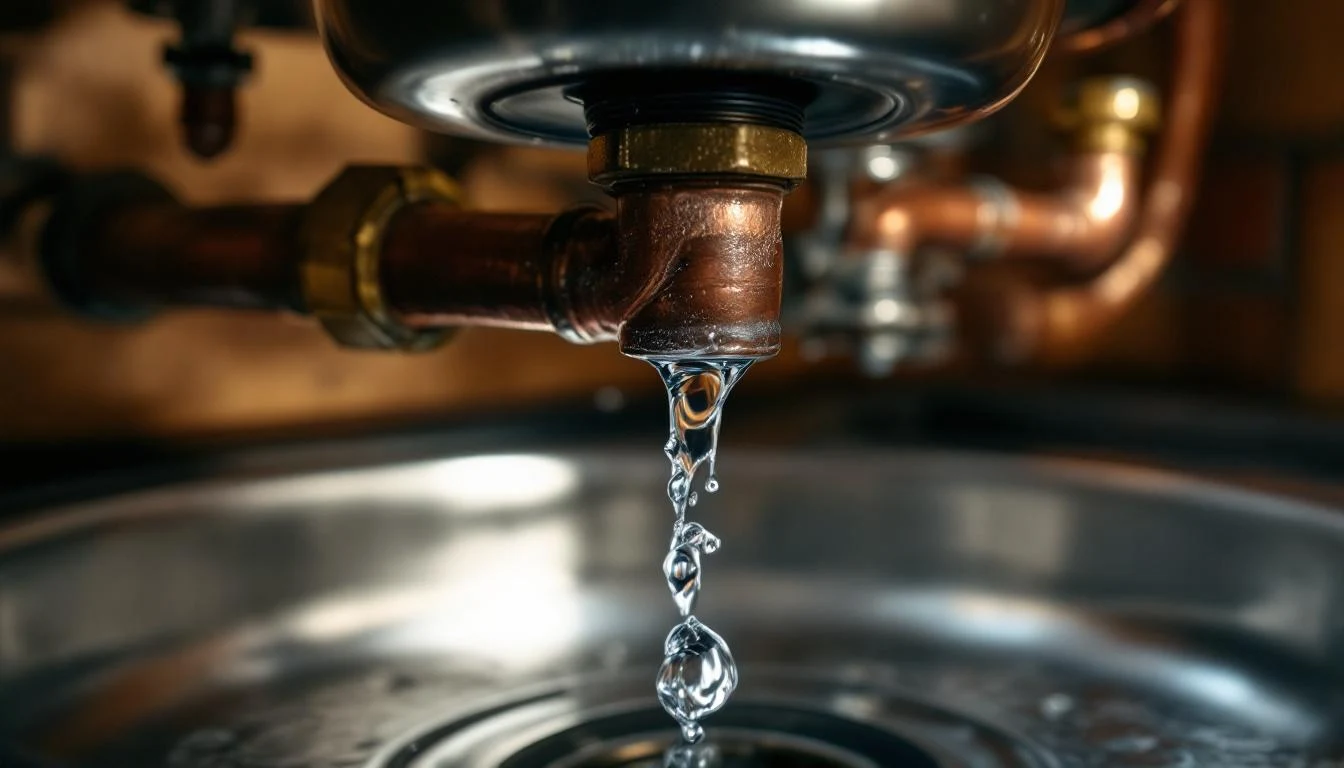
A burst pipe is the most damaging plumbing emergency a Cardiff home can have. Every minute you delay, another two to ten litres of water can pour into your floors, ceilings and walls. The good news: the first 60 seconds matter more than the next 60 minutes. Get the first minute right and it can be the difference between a major insurance claim and a straightforward repair.
This guide is written so you can scan it on your phone while standing in a puddle. Bookmark it now — you will not have time to read it later.
First 60 seconds: the burst pipe action plan
Read this once. Do it in order. Do not skip steps.
- **Shut off the stopcock.** This is the single most important action. The stopcock is the master tap for your whole home. Turn it clockwise until it stops. Water flow ends within 30 seconds.
- **Kill the electrics if water is near sockets, lights or appliances.** Go to the fuse box (usually in a hallway cupboard or under the stairs) and flip the main switch to OFF. Do not stand in water to reach it.
- **Open every cold tap in the house.** This drains residual water from the pipes upstairs before it has a chance to leak further. Flush each toilet once.
- **Contain the leak.** Buckets under drips, towels around the burst, plastic sheeting over electronics. Move anything valuable that the water has not yet reached.
- **Photograph and video everything.** Wide shots and close-ups. Your insurance claim depends on this evidence. Capture the source of the leak, the affected rooms, and any damaged belongings.
- **Contact a 24/7 Cardiff plumber.** That is us — request urgent help online. Tell us your postcode, the location of the leak, and whether the water is now off.
If you do steps 1-3 in the first 60 seconds, you have stopped the bleeding. Everything else is recoverable.
Where the stopcock usually is in a Cardiff home
If you do not already know where your stopcock is, find it now — before you ever need it. Cardiff homes vary by era and street.
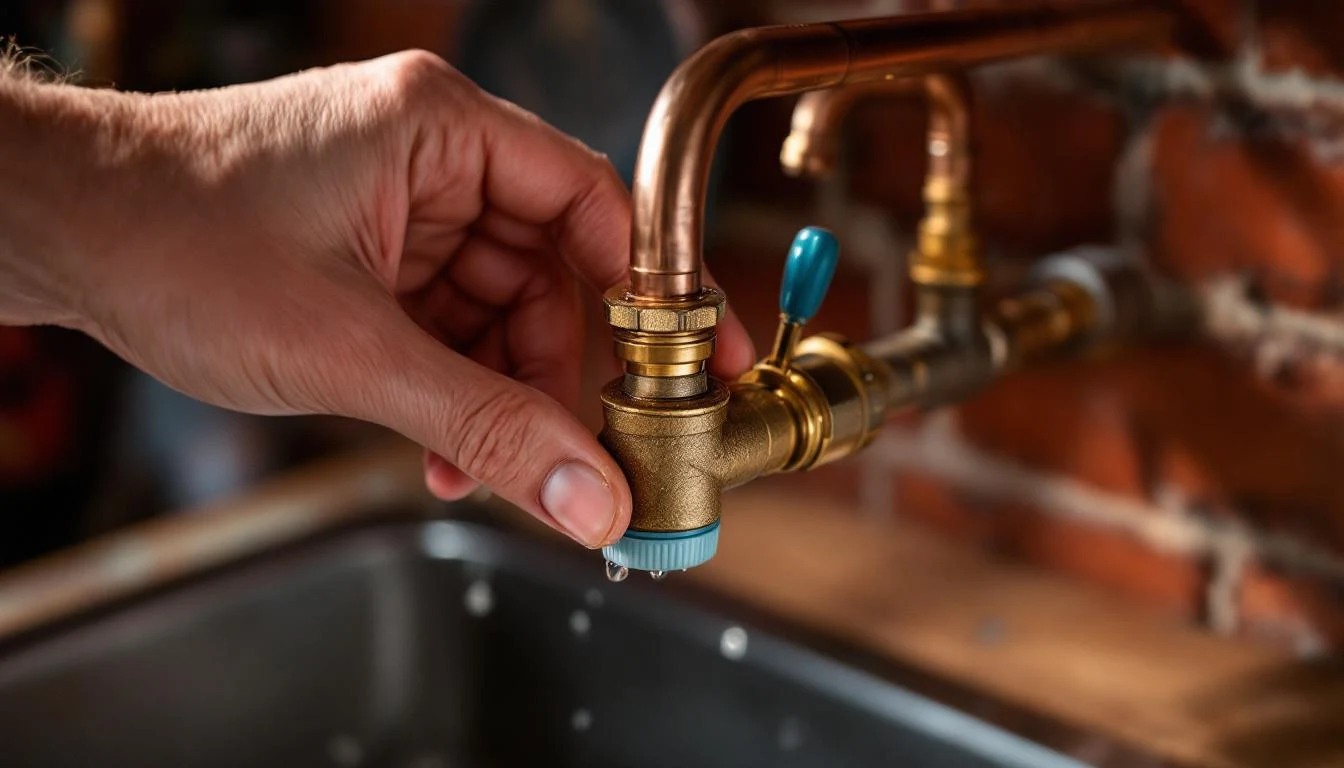
Modern semis and detached (1990s onwards)
Almost always in the kitchen, under the sink, at the back of the cabinet. Look for a small brass valve on the rising main, often with a red or blue indicator. New builds in Pontprennau, St Mellons and Cardiff Bay tend to put it in the utility cupboard.
Older terraces in Roath, Cathays and Grangetown
Often in the hall cupboard, sometimes under the stairs. In some Victorian conversions the stopcock is *outside* — by the front door, in a pavement chamber. If you cannot find it indoors, lift the small metal cover on the path. You will need a stopcock key (inexpensive, from any Cardiff trade counter) to turn it.
Flats and apartments
Usually in an airing cupboard or service riser. There is also a building-wide isolation valve that the freeholder controls — note that number too, in case your individual stopcock is seized.
What to do if your stopcock is seized
Many older Cardiff stopcocks have not been turned for 20+ years and seize solid. If yours will not budge:
- Do not force it with a wrench — you can snap the spindle and make the leak worse.
- Find the outside Thames-style water meter cover at the property boundary and turn the supply off there. You will need a long-handled key.
- If you cannot find that either, your water supplier (Welsh Water, hub.dwrcymru.com) has a 24/7 emergency line to isolate at the main.
The week you discover your stopcock works is the week you should service it. Ask us to service it as an add-on next time we are out for any other job — we'll quote a fixed price when you book, and it is well worth it.
How to spot a burst before it gets bad
Most burst pipes give warning signs hours or days before the catastrophic failure. If you spot any of these, get a Cardiff plumber out before the pipe gives way completely:
- **Water hammer** — a banging or knocking from the pipes when you close a tap. Suggests loose fittings or high pressure stressing a joint.
- **Damp patches** on ceilings, walls or skirting, especially after heavy use of an upstairs bathroom.
- **Sudden drop in water pressure** at a tap that previously ran strong.
- **Mystery puddles** on tiled floors or under sink units.
- **A water meter that ticks over** when nothing is running. Find your meter, write down the reading, do not use any water for 30 minutes, and re-check. If it has moved, you have a leak.
- **A spike in your water bill** with no change in household usage.
Any of these is worth a same-day call. Catching it early often means a straightforward joint repair instead of an expensive water-damage claim.
If a drain rather than a pipe turns out to be the source of the emergency, our guide on what to do before the engineer arrives covers the same first-response priorities for drain flooding and sewage backups.
Why Cardiff burst-pipe risk spikes in winter
Eight out of ten burst pipes we attend in Cardiff happen between mid-December and the end of February. The cause is almost always the same: a stretch of cold weather freezes a poorly-insulated pipe, the ice expands, and when the thaw comes the split joint releases everything at mains pressure.
Lagging tips that actually work
- Lag every pipe in the loft, garage, and any unheated cupboard with foam pipe insulation (inexpensive and available at any Cardiff DIY store).
- Pay special attention to the cold water tank in the loft — both the tank itself and the pipes feeding it.
- Outside taps need a foam cover *and* the internal isolation valve turned off for the winter.
- If you are going away for more than 48 hours in winter, leave the heating on at 12°C — it costs less than a single burst-pipe repair.
The Welsh Water website has a useful frost-protection checklist; cross-reference it with your own property in late November.
Should you turn the heating on?
If the pipes are frozen but not yet burst — yes, turn the heating on gently. A sudden blast of high heat causes the ice to thaw too fast, expanding water against any weak joint. Set the thermostat to 18-19°C and let it warm slowly over a few hours.
If the pipe has *already burst*, the order is reversed: water off first (steps 1 and 3 above), then heating on to prevent more freezing further down the system.
If a frozen pipe is visible (under a kitchen sink, in a garage), you can speed thawing gently with a hot water bottle, warm towel, or hairdryer on low. Never use a naked flame, a blowtorch, or a high-heat heat gun — these split pipes faster than the ice already has.
Insurance documentation
A well-documented burst-pipe claim is paid in full and within weeks. A poorly-documented one is argued over for months.
What to capture before any clean-up
- Date and time stamps on every photo (most phones do this automatically).
- Wide shots showing the room, then close-ups showing the burst source.
- Video walkthroughs are even better than photos.
- A photo of the meter showing usage during the leak.
- A list of damaged belongings with rough purchase dates and values.
What to get from the plumber
Ask your Cardiff plumber for a written report including:
- Date and time of attendance.
- Cause of the burst (frost, joint failure, corrosion, etc.).
- A statement that the burst was sudden and unforeseen (the magic insurance phrase).
- Cost breakdown of the repair.
- Photos of the failed component before disposal.
We send this report by email within 24 hours of every burst-pipe job.
Buildings versus contents cover
- **Buildings insurance** covers the structure: floors, walls, ceilings, fitted kitchens and bathrooms.
- **Contents insurance** covers your belongings: furniture, electronics, clothes, carpets that are not fitted.
- Most policies cover "trace and access" — the cost of finding the leak, including ripping up flooring.
- Most policies do *not* cover the actual pipe repair itself (you pay for that).
- Most policies *exclude* damage from leaks that have been "ongoing" — another reason to act in the first 60 seconds.
For an independent breakdown of your rights and what to claim, the Citizens Advice insurance guide is excellent.
What we do when we arrive
A typical Cardiff burst-pipe callout from us runs like this:
- **Confirm isolation.** Check your stopcock fully shuts the leak. If not, isolate further upstream.
- **Trace the burst.** Sometimes the visible drip is two metres from the actual split. We use thermal imaging and pressure tests to find the real source.
- **Repair.** For copper, either a soldered joint or a push-fit fitting depending on access. For plastic, push-fit only. For lead (still common in older Cardiff stock), we either patch with a lead-loc fitting or replace the section with copper.
- **Pressure test.** We re-pressurise the system and watch for any secondary failures — bursts often come in pairs.
- **Restore.** Stopcock back on, taps closed, system flushed, and a written report emailed to you.
Repair time depends on access and pipe material. The water is usually back on the same visit. We will tell you what the emergency plumber cost in Cardiff looks like before we start.
DIY temporary fixes that actually work
If you genuinely cannot get a plumber for a few hours (rare with our 24/7 cover, but possible during a regional freeze event), there are two temporary fixes that hold pressure surprisingly well.
Pipe repair clamp
A rubber-and-metal clamp that bolts around the burst, available inexpensively from any Cardiff plumbing merchant. Holds full mains pressure for days, sometimes weeks. The fastest emergency fix there is.
Two-part epoxy putty
Knead the putty until uniformly grey, press it firmly over the leak, hold for two minutes, leave for 30 minutes before re-pressurising. Works on copper and plastic, less reliable on lead.
What NOT to do
- Do not wrap the burst in tape (insulation, duct or otherwise). It will fail within minutes under pressure.
- Do not use chewing gum, sealant, or "magic putty" sold on TV. None of these hold mains pressure.
- Do not try to solder a wet copper pipe. It will not take.
- Do not turn the stopcock back on until a plumber has confirmed the repair.
Frequently asked questions
Will my insurance cover it?
In almost every case, yes — provided the burst was sudden and not from long-term neglect. Your buildings policy covers structural damage; your contents policy covers belongings. Document everything (see above) and submit the claim within 14 days.
How quickly can you get here?
For burst pipes we prioritise as a level-1 emergency and aim to reach you as quickly as we safely can, wherever you are across Cardiff, Penarth, Barry, or Caerphilly. Out-of-hours arrival times are the same as daytime — see our out-of-hours plumber page.
What if it's after midnight?
Call exactly as you would at midday. We are 24/7, 365 days a year, with no surcharge for night, weekend or bank holiday calls.
How much will the repair cost?
The cost depends on access — a repair behind a tiled wall or in a suspended floor takes longer than one under a sink. Request a fast, fixed-price quote online; we give you a written fixed price before we travel. See the full emergency plumber cost Cardiff breakdown for context.
Do I need to be home?
Yes, for the first attendance — we need access to the stopcock and the burst. Once isolated, you can leave us to finish the repair if you trust us with the keys, but most customers prefer to be in.
Can a frozen pipe burst more than once?
It can. The same freeze-thaw cycle weakens neighbouring joints. After any burst, ask your plumber to pressure-test the whole system. We do this as standard.
Get help now
If a pipe has burst in your home right now, stop reading and request urgent help from Emergency Plumber Cardiff 247 online. We respond fast, 24 hours a day, and have engineers on the road across Cardiff at all times.
Not an immediate emergency? Request a fixed-price quote online and we will get back to you with next steps.
For related reading, see our guide on the real emergency plumber cost in Cardiff and our emergency drain services page if water is coming up through a drain rather than down from a pipe.